Go Beyond Outreach and Truly Enable Your Creators to Sell With Co-Branded Storefronts
4 min read

Author
Rabii Babou
CEO & Co-Founder, Livano Agency
Influencer affiliate marketing has changed. The days of easy sales from a Story link or Linktree are mostly over. Today, profitability comes down to what happens after the click. If the conversion rate is not high, ROI falls apart.
That is where CreatorCommerce comes in. They turn standard affiliate links into personalized, CRO optimized storefronts that match the creator’s identity and guide shoppers to purchase.
Kenyon, CEO of CreatorCommerce, puts it best:
“Creator outreach and recruitment is just the tip of the iceberg. The very best brands also focus on helping their creators become successful sellers. This investment pays massive dividends in far larger returns on recruited creators, plus a natural flywheel of recruiting more creators through visible participation success.”
The shift is simple. Winning brands are not only recruiting more creators. They are converting more of the traffic that the traffic creators already drive
The problem with standard affiliate links
A typical flow looks like this:
Creator posts content → viewer clicks → generic page → confusion or distraction → drop off.
That break happens because the creator earns trust, then the shopper lands in an impersonal experience with no context.
In one sentence: Co-branded creator storefronts prevent the trust and context drop by keeping the creator’s identity, offer, and product path embedded in the shopping experience.
What a co-branded storefront includes
A co-branded storefront is a creator-specific shopping page inside the brand’s site.
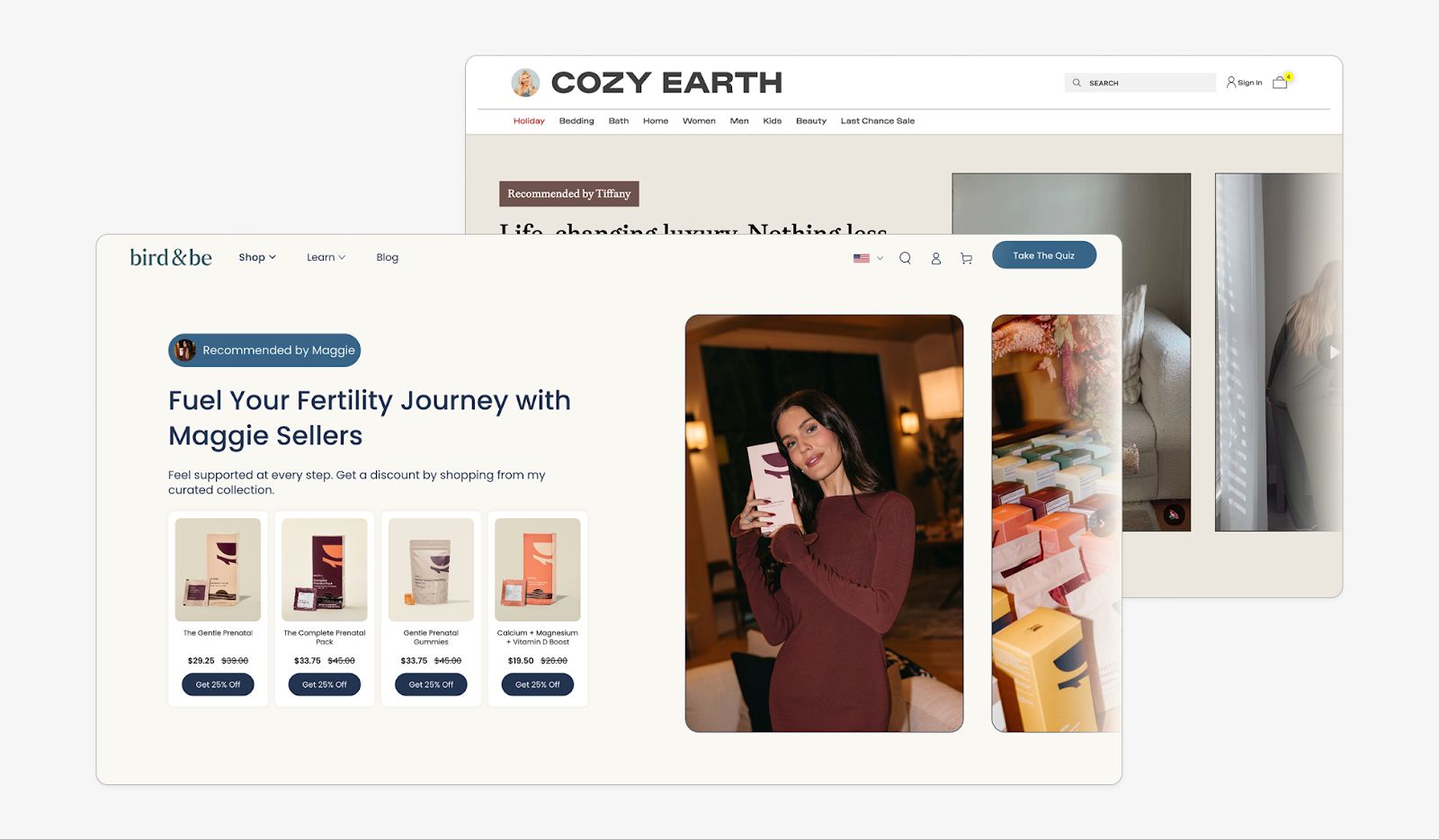
The best ones include:
1) Auto-applied discountsPrices are applied instantly, removing mental math and reducing friction.
2) Clear personalizationThe creator’s name is visible across heroes, banners, CTAs, and callouts so shoppers know they are in that creator’s shop and supporting them.
3) Creator content in the funnelUGC video carousels, testimonials, and creator-led content appear on the storefront and across key moments like product pages and cart.
Why does it beat a landing page or link in bio
A link in bio is a list of links. A typical landing page is often one message and one CTA.
A co-branded storefront is different because it is:
- On the brand’s owned storefront
- Connected to products, collections, bundles, cart, and checkout
- Built to scale across many creators with a consistent CRO structure
- Designed for browsing and buying, not just clicking
The biggest conversion drivers
Brands usually see fast wins from:
Auto-applying discounts plus creator identityLess friction, clearer value, more trust.
Creator curated collections that raise AOVCreators tell shoppers what to buy and how to bundle, which naturally lifts average order value.
Co-branded email flowsCreator name and identity can be carried into abandonment flows to pull attention back and recover more revenue.
Is it labor-heavy to run at scale
It does not need to be. At scale, the model looks like:
- Pages auto-generated from affiliate data
- Discounts and attribution are handled automatically
- Creators given access to manage their own picks and content
- Brands refresh funnels quarterly instead of doing manual upkeep
CreatorCommerce is built to be implemented directly on the brand’s theme, so it feels native, not bolted on.
Best practices for what to feature
Do not overbuild version one. Start simple:
- Best sellers or hero products
- Creator picks (top 3 to 6)
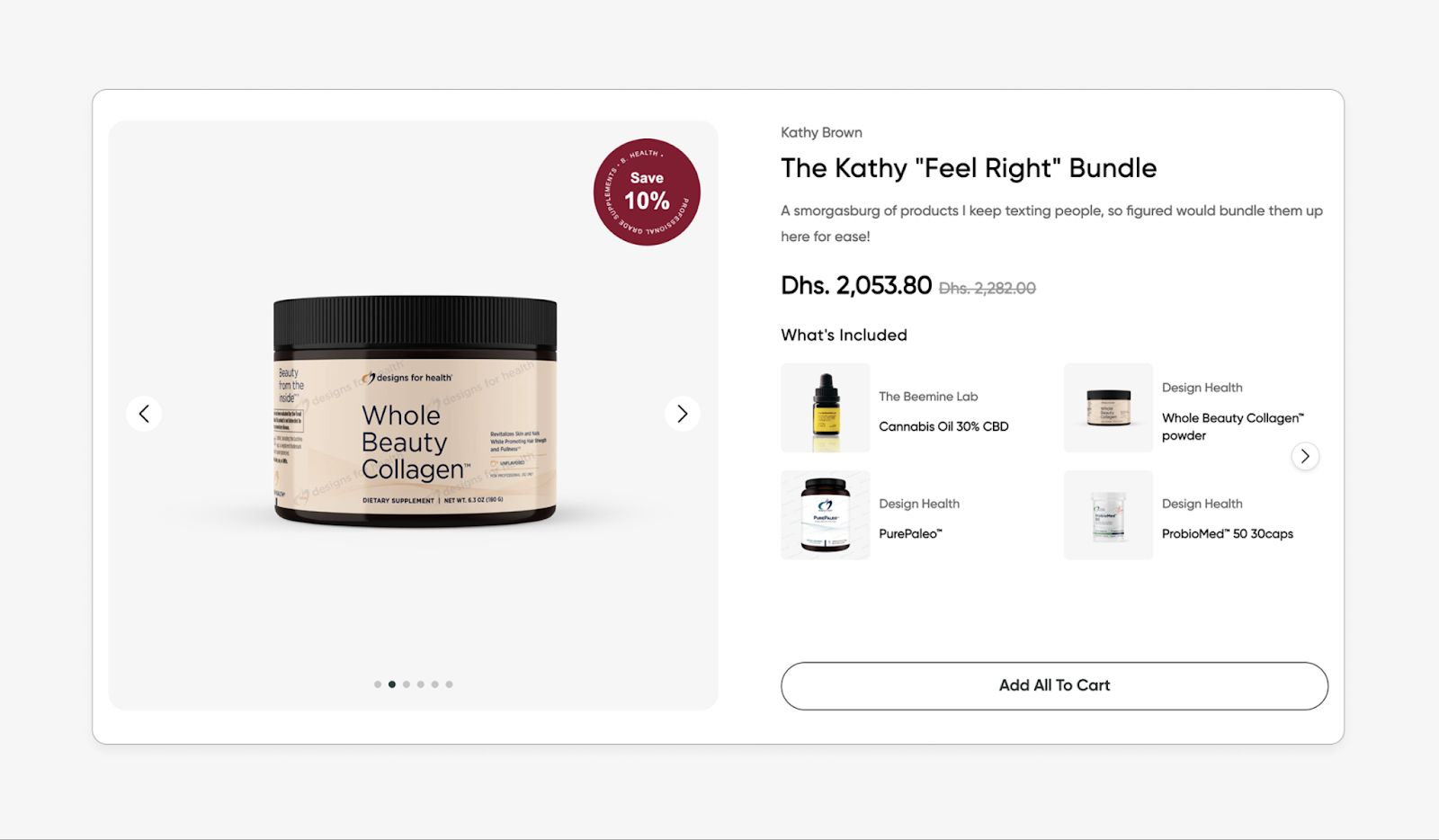
- One bundle block for easier multi-item checkout
- Social proof that matches the creator’s angle
Use prompts to improve curation, like:
- What do you use AM vs PM
- What would you pack for a weekend
- What is your go-to starter bundle
And ask for micro content that sells, like:“Make a 7-second video about why you chose us.”
Incentives and attribution
Keep it clean and motivating:
- Commission plus discount
- Integrations with tools brands already use, like Social Snowball, Goaff Pro, Shopify Collabs, GRIN, and Roster.
- Gamified earning cycles, such as 1.5x commission for a weekend or short flash boosts
Common mistakes to avoid
- Trying to collect too much content upfront. Start with 1 to 2 prompts, then layer over time.
- Making pages feel generic. Put the creator’s identity everywhere it matters.
- Treating it like a side project. Storefronts are a growth lever, measure and improve them like any channel.
If you are starting from zero, do this first.
Start with one creator who is excited to collaborate. Build one storefront, learn what converts, then scale what works.
Case studies and live example
Case studies: https://creatorcommerce.shop/case-studies
Cozy Earth example: https://creatorcommerce.shop/brand-case-studies/cozy-earth
Live storefront example: https://cozyearth.com/christinaandamber
Continue reading
Read More
TikTok Shop Business: How to Scale DTC Sales with Livano
Build a stronger TikTok Shop business and scale DTC sales with the right strategy, creator partnerships, and revenue-focused management.
Read article →
Best Agencies for TikTok Shop Advertising in 2026 | Livano
Scale DTC revenue with the best agencies for TikTok Shop advertising in 2026. hire top TikTok Shop agencies, influencers, and get best sales growth, Get a call.
Read article →
TikTok Shop Partner Agency: Services, Costs & Fit
Hiring a TikTok Shop partner agency? Explore core services, pricing models, and Find the right agency to scale your DTC e-commerce brand. Book 30min call now.
Read article →